
The Psychology of Multipolarity: How Nations Respond to Declining Western Dominance
PPG RESEARCH BRIEF
5/26/20264 min read
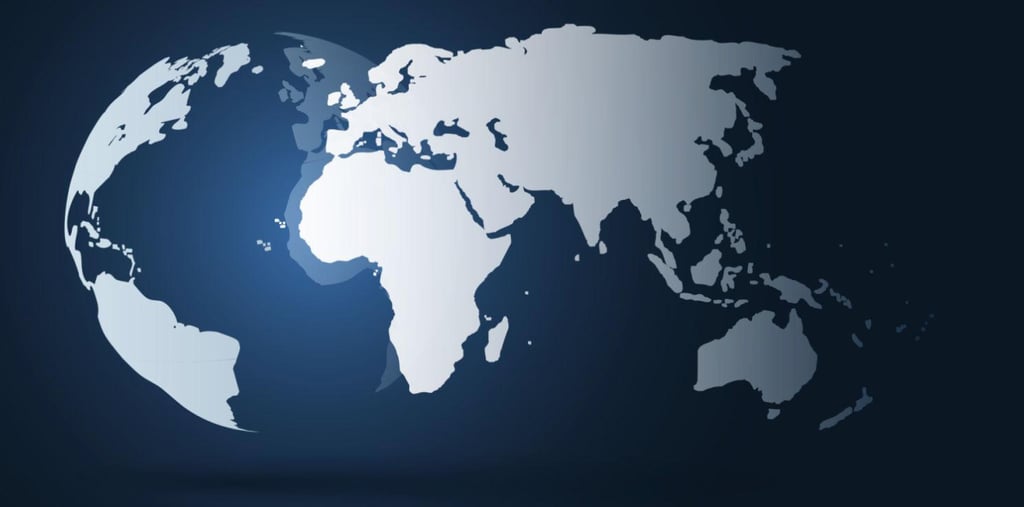
The global order is undergoing a structural psychological transition. For decades following the end of the Cold War, the international system operated largely under a unipolar framework dominated by Western economic, military, financial, and cultural influence. The United States and its allied institutions shaped much of the modern global architecture, including trade systems, financial norms, development frameworks, security arrangements, and information ecosystems. However, the rise of emerging powers such as China, the growing strategic autonomy of regional actors, and the increasing fragmentation of international consensus suggest that the world is gradually shifting toward a multipolar order.
While this transformation is often analyzed through military capability, trade competition, and geopolitical alliances, the psychological dimension of multipolarity remains underexplored. Global power transitions are not purely structural events. They are also emotional, cognitive, and identity-driven processes affecting governments, institutions, and populations alike.
Nations do not merely respond to material changes in power. They respond psychologically to perceived status shifts, symbolic influence, historical memory, and fears of decline or exclusion. As a result, the transition from unipolarity to multipolarity is producing behavioral reactions that increasingly shape international politics.
Historically, dominant powers tend to view global leadership not simply as strategic advantage, but as part of national identity. Over time, geopolitical dominance becomes psychologically normalized. Institutions, populations, and political elites begin interpreting their leadership role as natural, stable, and morally justified. Consequently, any relative decline in influence can trigger strong emotional and political responses, even when objective decline remains gradual rather than absolute.
This phenomenon is visible across many advanced Western societies today. Economic competition from emerging economies is often framed not merely as market rivalry, but as a broader challenge to identity, prestige, and ideological legitimacy. Public discourse increasingly reflects anxiety surrounding industrial decline, demographic change, technological competition, and geopolitical repositioning.
At the same time, rising powers experience their own psychological transformation. Countries that historically perceived themselves as marginalized or externally constrained begin developing stronger strategic confidence as economic and political influence expands. This often produces renewed nationalism, civilizational consciousness, and demands for symbolic recognition within international systems.
China provides one of the clearest examples of this dynamic. Its rise is not interpreted domestically solely as economic growth, but as a historical restoration following what Chinese political narratives frequently describe as a “century of humiliation.” Economic expansion therefore becomes psychologically connected to sovereignty, prestige, and civilizational recovery. As a result, geopolitical disputes involving trade, technology, or territorial influence frequently carry symbolic emotional significance beyond their immediate strategic value.
Similarly, countries across Asia, Africa, the Middle East, and Latin America increasingly seek greater strategic autonomy rather than strict alignment with traditional Western power structures. This does not necessarily imply direct opposition to the West. Rather, many states are attempting to diversify partnerships, reduce dependency, and strengthen national bargaining capacity within a more fragmented international environment.
The psychology of multipolarity is therefore closely tied to the concept of sovereignty. Emerging powers increasingly prioritize symbolic independence because global influence is not only material, but psychological. Nations seek recognition as decision-makers rather than passive participants within international systems.
This shift also affects public opinion. Populations exposed to narratives of national resurgence, historical injustice, or geopolitical competition often become more emotionally invested in foreign policy issues. Governments increasingly use identity-driven messaging to strengthen domestic cohesion during periods of global uncertainty. Nationalism, historical memory, and civilizational rhetoric become powerful political tools because they provide psychological stability within rapidly changing global environments.
At the same time, digital media amplifies geopolitical psychology at unprecedented scale. Information ecosystems no longer operate under centralized narratives dominated by a limited number of institutions. Social media, alternative media platforms, and state-influenced digital campaigns now compete aggressively to shape public perception.
As a result, geopolitics increasingly functions within an attention-driven environment where emotional narratives spread faster than nuanced diplomacy. Governments and political actors understand that perception itself has become a strategic battlefield. Winning international influence now depends not only on military strength or economic capacity, but also on narrative dominance.
This contributes to the rise of information warfare, disinformation campaigns, and strategic polarization. States increasingly attempt to influence foreign populations psychologically by exploiting identity divisions, institutional distrust, and emotional grievances. Modern geopolitical competition therefore extends into cognitive space.
Behavioral economics helps explain why these strategies are often effective. Human beings are naturally vulnerable to:
confirmation bias,
in-group loyalty,
emotional framing,
and threat perception.
Digital systems amplify these tendencies by rewarding emotionally stimulating content. Consequently, geopolitical narratives framed around fear, humiliation, national pride, or civilizational conflict often achieve stronger engagement than rational policy discussion.
This creates significant risks for global stability. As populations become increasingly emotionally reactive, diplomatic flexibility declines. Governments facing domestic pressure may adopt more aggressive postures to avoid appearing weak or submissive. Public opinion, once considered secondary in strategic affairs, now exerts growing influence over international decision-making.
Multipolarity may therefore increase not only strategic competition, but also psychological volatility.
Economic fragmentation represents another important consequence. Trust forms the foundation of global economic systems. Financial networks, trade relationships, reserve currencies, and multinational institutions all depend heavily on collective confidence and predictability. However, periods of geopolitical transition often weaken shared assumptions regarding leadership and institutional neutrality.
As competing blocs emerge, nations increasingly prioritize resilience, supply chain security, strategic industries, and technological independence. This reflects not only rational strategic planning, but also psychological risk perception. Countries fear vulnerability within uncertain global systems.
The result is a gradual movement away from hyper-globalization toward selective interdependence.
Importantly, multipolarity does not automatically guarantee instability. In some respects, a more balanced distribution of power may create opportunities for regional cooperation, diversified development, and reduced overdependence on single systems. However, successful multipolarity requires strong diplomatic institutions capable of managing psychological competition alongside material competition.
Future global leadership may therefore depend increasingly on behavioral intelligence — the ability to understand how identity, perception, historical narratives, and emotional responses shape international behavior.
Traditional geopolitical analysis often prioritizes military strength and economic indicators while underestimating the psychological dimensions of power transitions. Yet history repeatedly demonstrates that perception can become as influential as capability itself. Nations rise not only through economic expansion, but through confidence, legitimacy, and narrative influence.
The emerging multipolar era is therefore not simply a redistribution of power. It is a global psychological recalibration.
Societies across the world are adjusting to changing assumptions regarding leadership, sovereignty, prestige, and strategic identity. Some populations experience anxiety over declining dominance, while others experience renewed confidence and assertiveness. Governments increasingly operate within emotionally charged environments shaped by digital media, nationalism, and symbolic competition.
Understanding these behavioral forces may become essential for preserving stability in the decades ahead. The future of international relations will likely depend not only on how nations manage power, but also on how they manage perception, identity, and collective psychology within an increasingly fragmented global order.
© 2026 Paras Panjwani. All rights reserved.

